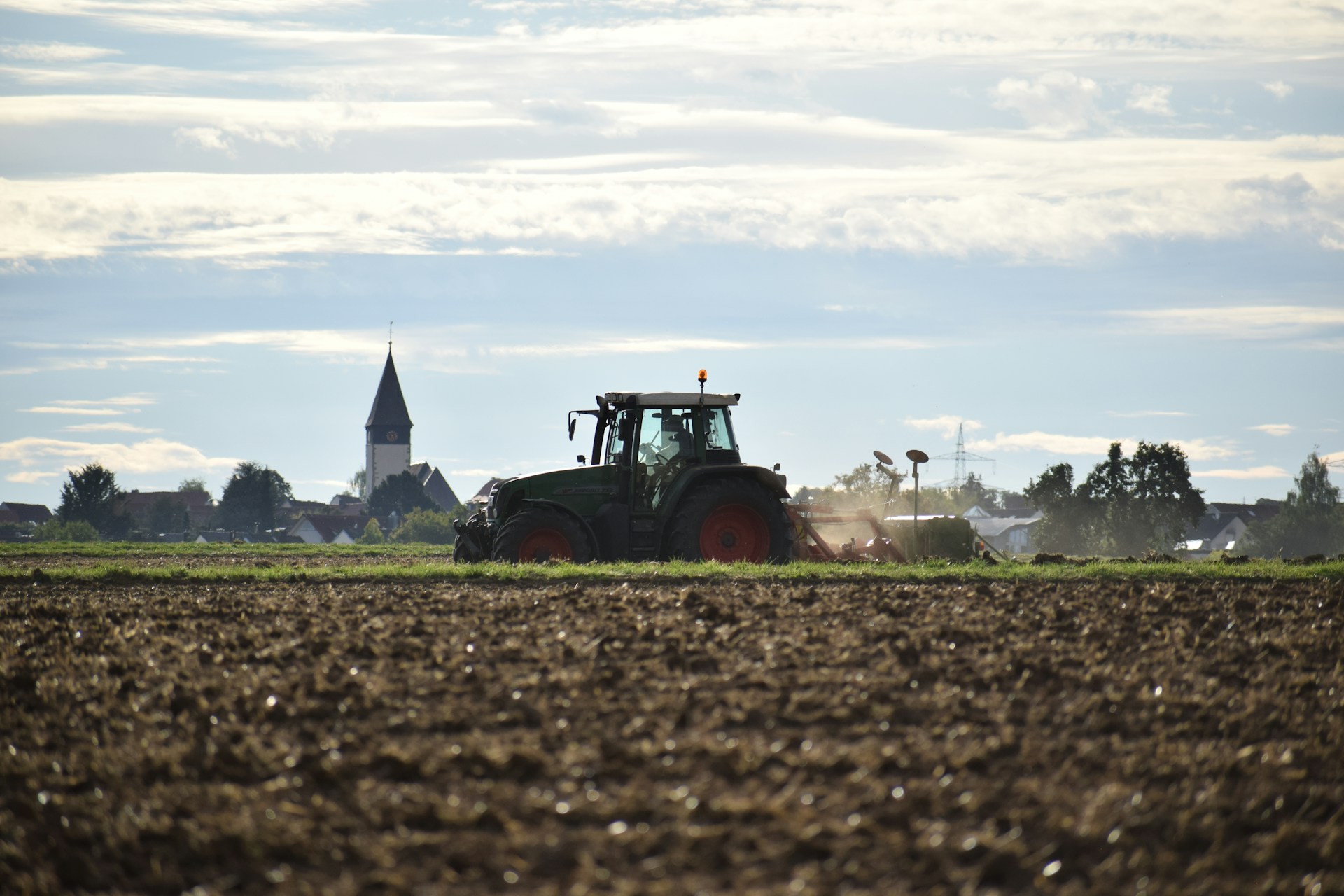

McDaniel Farm Auction: 80 Starke County Acres Sell for $605,000
The McDaniel Farm auction concluded with a sale price of $605,000 for 80 acres in Starke County, Indiana. With 74.53 tillable acres and a mix of sandy soils, this was a solid result supported by competitive bidding through the close.
The result also compared favorably with two nearby farmland auctions after accounting for differences in soil productivity and allocating estimated values to non-tillable acreage and improvements.
For landowners considering a sale, those comparisons provide useful context. Price per acre is a starting point, but understanding the property behind each result gives a more complete picture.
The McDaniel Sale at a Glance
Sale price: $605,000
Total acreage: 80 acres
Tillable acreage: 74.53 acres
Tillable percentage: Approximately 93.2%
Price per total acre: $7,562.50
Weighted Average Productivity Index: 108.5
The Weighted Average Productivity Index, or WAPI, summarizes the soil productivity ratings within the mapped property. A higher rating generally indicates greater soil productivity potential. It is a useful comparison tool, although drainage, irrigation, management, and other conditions also affect a farm’s performance.
McDaniel included sandy soils with varying productivity ratings. That matters when comparing its result with farms containing more productive soils.
Looking Beyond Price per Total Acre
To put McDaniel’s result in context, I reviewed two other Starke County auction sales.
Comparable Sale 1 totaled $1,883,097 for 240.30 acres, including 230.84 tillable acres. Its mapped WAPI was 135.2.
Comparable Sale 2 had a winning bid of $410,000. Including a 5% buyer’s premium, the buyer’s purchase cost was $430,500 for 43.35 acres, including 37.81 tillable acres. Its mapped WAPI was 118.5, and the property included buildings and other improvements.
Simply dividing each purchase price by total acreage would overlook those differences. For this comparison, I separated estimated non-tillable and improvement values from the amount attributed to tillable ground.
The analysis uses these allocations:
Non-tillable acreage valued at $2,500 per acre across all three farms.
An estimated $125,000 allocated to buildings and other improvements on Comparable Sale 2.
No improvement allocation applied to McDaniel or Comparable Sale 1.
The remaining value was divided by tillable acres to calculate an adjusted price per tillable acre. That figure was then divided by WAPI to calculate the price paid per soil productivity point.
Where McDaniel Stood Out
Using those assumptions, the results were:
Property | WAPI | Adjusted Price per Tillable Acre | Adjusted Price per WAPI Point |
|---|---|---|---|
McDaniel Farm | 108.5 | $7,934 | $73.12 |
Comparable Sale 1 | 135.2 | $8,055 | $59.58 |
Comparable Sale 2 | 118.5 | $7,714 | $65.09 |
McDaniel achieved approximately 12% to 23% more per soil productivity point than these two nearby sales under the stated allocations.
The first comparison is particularly useful. McDaniel brought just 1.5% less per adjusted tillable acre despite having a WAPI approximately 19.7% lower. The tillable pricing was similar even though McDaniel’s soil productivity rating was substantially lower.
Against Comparable Sale 2, McDaniel achieved both a higher adjusted price per tillable acre and a higher price per productivity point, using the estimated improvement allocation.
We were pleased to deliver that outcome for the McDaniel sellers, particularly given the farm’s sandy soil profile.
These comparisons do not account for every difference in drainage, location, access, zoning, farm size, or sale date. The WAPI figures describe the mapped properties, and the allocations are estimates. Comparable Sale 1 uses its advertised auction acreage; using its slightly smaller mapped acreage leaves the overall conclusion similar. These figures compare purchase values rather than seller net proceeds.
Competitive Bidding Through the Close
Our bid-history review recorded 41 bids from six bidder IDs. Three bidders reached $590,000, $600,000, and $605,000—each within approximately 2.5% of the final price.
That indicates multiple buyers supported pricing near the final result. The recorded late-stage bidding moved from $525,000 to $605,000, an increase of $80,000, or approximately 15.2%.
Total bid counts provide some information, but they do not tell the whole story. The prices competing buyers are willing to reach near the close help explain the strength behind a result.
For McDaniel, continued competition through the finish was a positive part of the sale.
The Auction Approach Matters Too
When comparing auction results, sellers should also consider who will handle their sale, how well that person knows the local farmland market, and how the auction is structured.
A broad service area can provide reach, but sellers should ask how regularly their representative works in the county and how directly they will be involved. Understanding local soils, rental conditions, recent sales, and likely buyers takes more than reviewing a map.
Farmland also calls for a different approach than equipment or other personal property. Buyers need clear information about productivity, drainage, access, leases, and possession. Experience handling those questions is an important part of preparing a farm for auction.
These are considerations for choosing an auction firm. The sale comparisons alone do not establish what caused the differences in results.
Look Beyond the Advertised Seller Commission
A buyer’s premium can be attractive to sellers because it shifts part of the auction fee to the buyer, reducing the commission charged directly to the seller. The important question, though, is what the seller receives after all fees.
Buyers who account for the premium in their total budget may reduce their bids accordingly. For example, a buyer with a $600,000 purchase budget could bid approximately $571,429 with a 5% premium, before other closing costs. The premium changes how that budget is divided; it does not necessarily increase what the buyer will spend.
If a higher premium reduces bidding enough, the seller could lose more in sale proceeds than they save in commission. The size of the premium and how buyers respond both matter.
That is why I encourage sellers to evaluate the entire fee structure and expected net proceeds. A lower advertised seller commission can be appealing, but it does not automatically produce the better outcome.
Local Relationships Backed by Halderman’s Network
Knowing the farm is one part of the job. Getting it in front of likely buyers is another.
My relationships with farmers, landowners, and investors across Northwest Indiana and Southwest Michigan help me connect properties with people who have a reason to consider them. That local network is supported by Halderman’s broader connections with farmland buyers and agricultural investors.
I believe that combination can be a difference maker. Local relationships help identify interest close to the property, while Halderman’s reach helps introduce the opportunity to buyers beyond the immediate area. Both matter when the goal is to encourage competition.
Through my farmland selling services, I combine that buyer outreach with clear property information and a sale method suited to the seller’s goals.
The buyers ultimately determine the price, but reaching them and helping them prepare to participate is where we can make a difference. We were pleased to see competitive bidding carry the McDaniel auction through the close.
Considering a Farmland Auction?
The McDaniel sale reflects the approach I bring to farmland auctions: local knowledge, established buyer relationships, and Halderman’s broader marketing resources and experience.
If you are considering selling farmland in Starke County or Northwest Indiana, I would welcome the opportunity to discuss your property. We can review recent results, compare sale options, and outline how we would market your farm.
For owners deciding between selling and continuing to rent, reviewing income, upcoming expenses, and farm management options can also help clarify the decision.
Thank you to the McDaniel sellers for trusting us with the sale and to everyone who participated. Congratulations to the buyer.
Contact me to discuss your farm and the next steps.
Nolan Sampson | Halderman Real Estate & Farm Management
219-575-1486 | nolansampson.com